Showing posts with label kale. Show all posts

Monday, 9 November 2015

Harnessing the power of green

FFF Photo a Day - Day 314

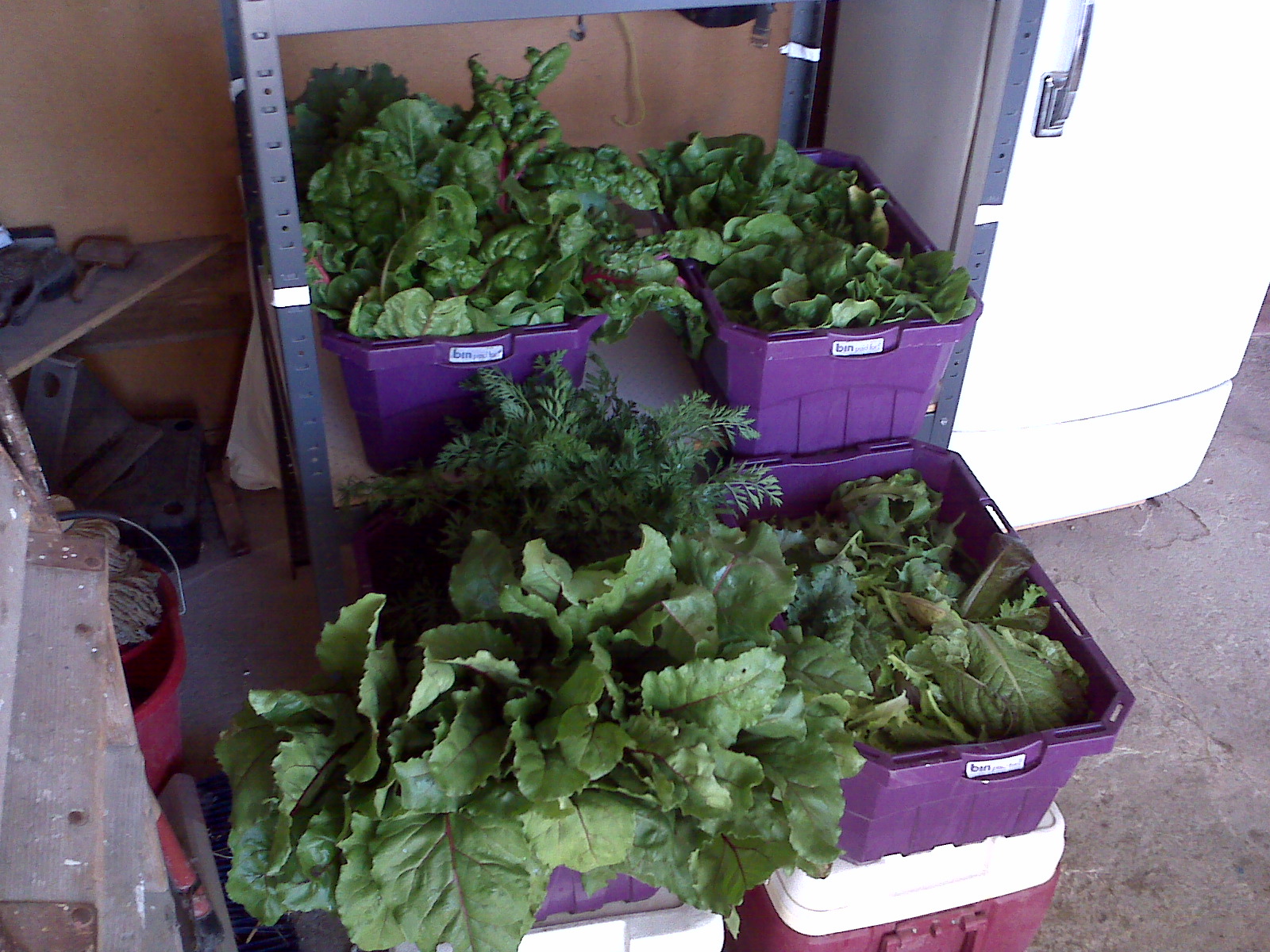
The mild fall weather has meant an seemingly unending supply of cold weather greens such as kale, spinach, swiss chard and lettuce. 

Besides eating them fresh daily, we prepare for winter by drying them and making green powder to use through those cold months when getting your greens is difficult. #harnessthegreen 

Tuesday, 2 June 2015

Cover up!

FFF Photo a Day - Day 153


We've made a commitment to ourselves, the earth and our customers to grow food in a sustainable, natural manner. 

This means that we need to deal with weeds, pests and disease in non-chemical ways. We use this fabric row cover to protect our plants in a number of situations. 

Here we have broccoli under cover from the cabbage moth! Broccoli belongs to the Brassica family and thus is a favorite of the cabbage worm/moth! We cover all brassicas from the time they are seeded until harvest. Other brassicas to cover are cauliflower, turnip, kale, and of course, cabbage! 

This row cover lets water and sunlight in but keeps pests out. It is light enough that the plants push the cover up as they grow. 

Tuesday, 8 July 2014

Week #2 - 2014 FFF CSA - What's in the Box - Kale Chips!

Welcome to week #2! We hope you enjoyed your first box of goodies and are anxiously awaiting some more.

Despite the weather, the veggies are doing alright although a few are showing signs of stress (yellowing at the roots). Luckily the fact we have hilled our rows and plant primarily in mulch or straw bales, means that the plants are not sitting in water! Our animals however, are not as lucky! Everyone's looking for high, dry ground! That being said we are soooo much better off than people along the Assiniboine and other tributaries so we are grateful for that and hope that everyone gets through the next few days safely and with minimal damage. 


Today I thought I would talk a little about kale. It is often a leafy green that some people are not familiar with. Kale is a brassica, so in the same family as broccoli, cauliflower, and cabbage. This means that the cabbage moth/worm love kale and we have to grow it under cover to save it from being eaten! After last week, you will know that kale is very good for you and is considered one a powerhouse vegetable. Fresh, tender kale leaves can be used like lettuce in a salad, can be cooked or steamed like spinach or my favorite... can be made into Kale Chips! This healthy but tasty snack is even a hit with our kids. 


Rip the kale into bite size pieces, toss with oil until fully coated, lay out on a cookie sheet or dehydrator tray and then season with whatever combination of spices you wish - garlic & salt and pepper are good or add some cayenne pepper for a little more zip! If you want to get creative, try curry! Pop in the oven at 250F for 4-6 hours or until dry and crunchy or in the dehydrator (if you have one).  While the dehydrator is the healthier choice as the plant remains "alive" and the nutrients don't degrade, my kids actually enjoy the oven dried version best! 

So... What's in the Box this week?
  • Radishes
  • Swiss Chard
  • Lettuce
  • Beets
  • Turnip
  • Kale
  • Basil
  • Oregano
  • Chives
  • Parsley (flat and curled)
  • Cilantro 
As always in the beginning of the growing season you will again enjoy a lot of fresh greens this week. A note about the best way to preserve the life of the greens as if you don't take some care you may find them wilted! As you will have discovered we put everything we can (with their ends) into water to keep it as fresh as possible. When you get home, be sure to put the greens in the crisper or in a plastic bag in the fridge as soon as possible. To freshen up any greens, submerge completely in icy cold water. I find adding some lemon juice to the water also helps. Keep the greens there for a while - 5-10 minutes and it should freshen things considerably. If you can be sure to spin after in a lettuce spinner or dry off as well as you can before putting back in the fridge. The dryer the better if you are storing in a plastic bag. 

We pick the vegetables within 24 hours of the box being delivered. We do rinse the produce but it would be prudent to wash all vegetables when you get them home. Keeping the herbs (ends) in a cup of clean water will keep them fresh longer.

Please return your empty box along with all re-usable containers (ice cream pails, plastic containers, etc) so that we can reuse them all over again. 


Follow us on Facebook or on Twitter at @FenezFollies

Tuesday, 9 July 2013

Week #2 - FFF CSA - What's in the Box - Dr. Seuss knows best!

To perhaps re-phrase a rather famous children's book....would you eat green leaves of kale, would you, could you from a box? How about our CSA box?

For those of you who have not tried kale before, I thought it might be helpful to get a bit more information about this highly nutritious leafy green that you will find in your CSA box. Kale is a brassica - so in the same family as broccoli, cabbage, cauliflower, etc.


Kale when young and tender is great in a salad. Many people add this leafy green to their daily smoothies for a super boost of nutrition!
 
We particularly love kale when baked or dehydrated into chips - simply toss in olive oil and add salt and/or other spices (garlic powder or curry are great), spread on cookie sheet and bake until crispy on a lower temperature to avoid burning. If you have a dehydrator you can also use that to create yummy kale chips. Kale can also be cooked, sauteed or stir-fried much like spinach can. I've included a link below to 20 Top Kale recipes for further ideas.

http://allrecipes.com/recipes/fruits-and-vegetables/vegetables/greens/kale/top.aspx

 
Kale can come in green or purple colours and can be curly or flat. The variety we are currently harvesting is green and purple curled kale.

So will you try green leaves of kale? Dr. Seuss is always right… try them, try them and you may... like them... that is!


What's in the Box - Week #2

This week you will find in your box:

Lettuce (mixed greens)
Swiss Chard
Kale
Herbs (Parsley, Basil, Chives, Cilantro, Oregano )
Radishes
Beets
Carrots
Zucchini

Please remember to wash/rinse your vegetables. While we don't use any chemicals, we do use all natural fertilizer (a.k.a. manure) so its always advisable to give everything a rinse.

For the next few weeks, Philip is away in Japan so I'm a "single farmer" as it were. I'm off from my other job so I'm enjoying the routine of animals, weeding, watering... repeat!  But it is hard to have my partner in crime away! He is off chaperoning 10 youth (17-18 year olds) on a 4H exchange trip to Japan. For years, we have hosted Japanese youth at our house, so its quite a thrill for someone in our family to get to go over and experience the culture first hand! Can't wait to hear all about it when he returns.

The veggies are coming along nicely albeit slower than we would like. The hot weather can slow some things down and create issues for flowering plants such as tomatoes, etc. However, at this point we are not overly worried. (Who am I kidding, farmers worry about everything!)  Some cooler days like today are a welcome relief for both plants and us humans!

Hope you enjoy your veggies and that they inspire you to try something different this week!  

Wednesday, 4 July 2012

Week #2 Fenez Follies Farm CSA – What’s in the box? This week’s featured vegetables – Swiss Chard

Sometimes you need to be careful what you wish for…. We wanted some heat – well boy did we get some…now we want some rain. (I know, we farmers are never happy!). Anyway this week we have a few new items, thanks to the heat!

What’s in this week's box:

Carrots
Broccoli
Kale
Swiss Chard
Butternut Lettuce
Mixed Greens
Beets
Radish
Mixed Herbs (Thyme, Basil, Cilantro, Oregano, Dill)


This week’s focus on food?  Chard

Chard is a leafy green vegetable often used in Mediterranean cooking. While the leaves are always green, chard stalks vary in color. Chard has been bred to have highly nutritious leaves at the expense of the root (which is not as nutritious as the leaves). Chard is, in fact, considered to be one of the healthiest vegetables available and a valuable addition to a healthy diet (not unlike other green leafy vegetables).


Chard is a member of the beet family – also referred to as chenopods. Chard is also known by many common names such as Swiss chard, silverbeet, perpetual spinach, spinach beet, crab beet, bright lights (due to the bright and vivid spring colors when they are cooked or provided as a medley of vegetables), seakale beet, and mangold.

Chard can be harvested while the leaves are young and tender, or after maturity, when they are larger and have slightly tougher stems. Raw chard is extremely perishable.
Chard has shiny, green, ribbed leaves, with stalks that range from white to yellow to red, depending on the type.

Fresh young chard can be used raw in salads. Mature chard leaves and stalks are typically cooked or sauteed: their bitterness fades with cooking, leaving a refined flavor which is more delicate than that of cooked spinach.
Swiss chard is high in vitamins A, K, and C with a 175 g serving containing 214%, 716%, and 53%, respectively, of the recommended daily value. It is also rich in minerals, dietary fiber and protein.

Swiss Chard Recipe
Ingredients
·  1 large bunch of fresh Swiss chard
·  1 small clove garlic, sliced
·  2 Tbsp olive oil
·  2 Tbsp water
·  Pinch of dried crushed red pepper
·  1 teaspoon butter
·  Salt
Method
1 Rinse out the Swiss chard leaves thoroughly. Remove the toughest third of the stalk, discard or save for another recipe (see below). Roughly chop the leaves into inch-wide strips.
2 Heat a saucepan on a medium heat setting, add olive oil, a few small slices of garlic and the crushed red pepper. Sauté for about a minute. Add the chopped Swiss chard leaves. Cover. Check after about 5 minutes. If it looks dry, add a couple tablespoons of water. Flip the leaves over in the pan, so that what was on the bottom, is now on the top. Cover again. Check for doneness after another 5 minutes (remove a piece and taste it). Add salt to taste, and a small amount of butter. Remove the swiss chard to a serving dish.

SWISS CHARD STEMS

Do the following:
1. Boil until tender
2. Chop into small pieces
3. Mix Tahini (sesame seed paste) or in a pinch and out of tahini, use peanut butter, lemon juice, a piece of crushed garlic and a little water, salt and pepper. This should be a pourable sauce. Proportions are up to you. I use about 1 large spoon of tahini to 1/2 spoon of lemon juice. This will be VERY THICK. Add water by the spoonful, and stir until the right consistency. Pour this mixture over the cooked, chopped stems. Eat on pita bread or tortillia rolled up. Very tasty.
4. Keep cooked stems in freezer and add to soups, stews, stir frys, mix in rice dishes, and I know you will think of another way.

Enjoy!

Tuesday, 26 June 2012

Kale - the king of cruciferous vegetables!


As many of our CSA shareholders are or will be digging into their boxes and finding some yummy Russian Kale... we wanted to highlight this wonderful vegetable for you....

Kale, a member of the cruciferous vegetable family (kin to cabbage, broccoli, and cauliflower) are one of the healthiest vegetables around! The beautiful leaves of the kale plant provide a wonderful flavor and more nutritional value for fewer calories than most other foods.


Another great idea is making Kale Chips!
  • Tear the leaves from a bunch of washed and dried kale into bite-size pieces.
  • Toss with a thin drizzle of extra-virgin olive oil (a couple of teaspoons will do) and massage lightly into the leaves.
  • Sprinkle with a pinch of salt, tossing to distribute. Or leave out the salt and add the seasoning of your choice, such as curry powder, smoked paprika, or whatever you have on hand.
  • Arrange leaves in a single layer on two large baking sheets.
  • Bake at 350°F (180°C), switching baking sheets halfway through, until crispy and dark green (not brown), 12 to 15 minutes.
  • Let cool slightly and dig in.
Enjoy!

To store, place kale in a plastic storage bag removing as much of the air from the bag as possible. Store in the refrigerator where it will keep for 5 days. The longer it is stored, the more bitter its flavor becomes. Do not wash kale before storing because exposure to water encourages spoilage.
Tips for Preparing Kale
Rinse kale leaves under cold running water. Chop leaf portion into 1/2" slices and the stems into 1/4" lengths for quick and even cooking.

To get the most health benefits from kale, let sit for a minimum of 5 minutes before cooking. Sprinkling with lemon juice before letting them sit can further enhance its beneficial phytonutrient concentration.

We recommend steaming kale for maximum nutrition and flavor. Fill the bottom of a steamer pot with 2 inches of water. While waiting for the water to come to a rapid boil chop greens. Steam for 5 minutes and toss with your favorite dressing.  
A Few Quick Serving Ideas
  • Braise chopped kale and apples. Before serving, sprinkle with balsamic vinegar and chopped walnuts.
  • Combine chopped kale, pine nuts, and feta cheese with whole grain pasta drizzled with olive oil.

Week #1 - Fenez Follies CSA 101

This week kicks off our first week of our CSA for the Summer of 2012! Some of our shareholders are digging into their box tonight while others are merely dreaming of the lush produce that awaits! We thought that we would provide a brief CSA 101 for our newbies.

The drop off locations and times won't change throughout the 12 weeks. If you need to switch locations, want additional items such as eggs or meats with your CSA box or are having someone else pick up your box for you, please let us know (preferably by e-mail) by Monday night.

The box your vegetables come in (and any plastic containers such as the ice cream pail, etc) that were in them should be returned the following week empty and we will replace with a full box. If you have extra ice cream pails or larger containers - we would gladly take them off your hands and re-use instead of you recycling them. We will also take any egg cartons that you have.

Each week we will post a "What's in the box!" on this site, linked to our Facebook page, and sent via e-mail to hopefully answer any questions you may have as you peek into the box. We will also try to highlight one or two of the veggies and provide a recipe on how you might use your produce.

Any questions on anything at all, please let us know!

So..... What's in this week's box??

Kale (more on that in our second post tonight)
Spinach (in the bag)
Lettuce
Swiss Chard (yellow and bright red stems)
Beets (don't forget - you can eat both the beet and the greens!)
Radishes
Home made Soap (made from fresh goat's milk straight from our nanny goats!)
A small selection of herbs (chives (purple flowers) , basil, some cilantro tops (white flowers)

This wonderful heat is helping things along so you can anticipate beans, peas, broccoli, carrots and perhaps some small potatoes... mmm!

With this week's box you could make several heaven sent salads and check out our next post on the many things you can also do with the kale.